
Late updated: 07 Dec 2025 14:12
Written by: Oliver Bennett
Digital Inclusion Initiatives For UK Countryside Communities: Bridging The Connectivity Gap
Accelerating digital inclusion in UK countryside communities can transform these areas into thriving hubs of connectivity and innovation. By ensuring access to digital skills training, affordable devices, and reliable internet services, rural regions can fully participate in the digital economy. There is immense potential for growth, with the right strategies bridging any existing digital divide.

We've explored how specific initiatives are making a significant impact on rural digital inclusion. These strategies include diverse community-led projects, government action plans, and collaborations with local authorities. Each aims to enhance digital accessibility and literacy, providing residents with the necessary tools to connect and thrive in an increasingly digital world.
Through our journey, we have discovered that meaningful digital equity in rural areas requires more than just technology deployment. It involves understanding and addressing the unique barriers faced by these communities and fostering sustainable community involvement. By doing so, we can support lasting change and empower these communities to participate actively in modern society.
Key Takeaways
- Digital inclusion boosts rural communities' connectivity and innovation.
- Community-led projects and government initiatives drive digital access.
- True digital equity requires addressing unique rural challenges.
Key Digital Inclusion Initiatives Shaping UK Countryside Communities
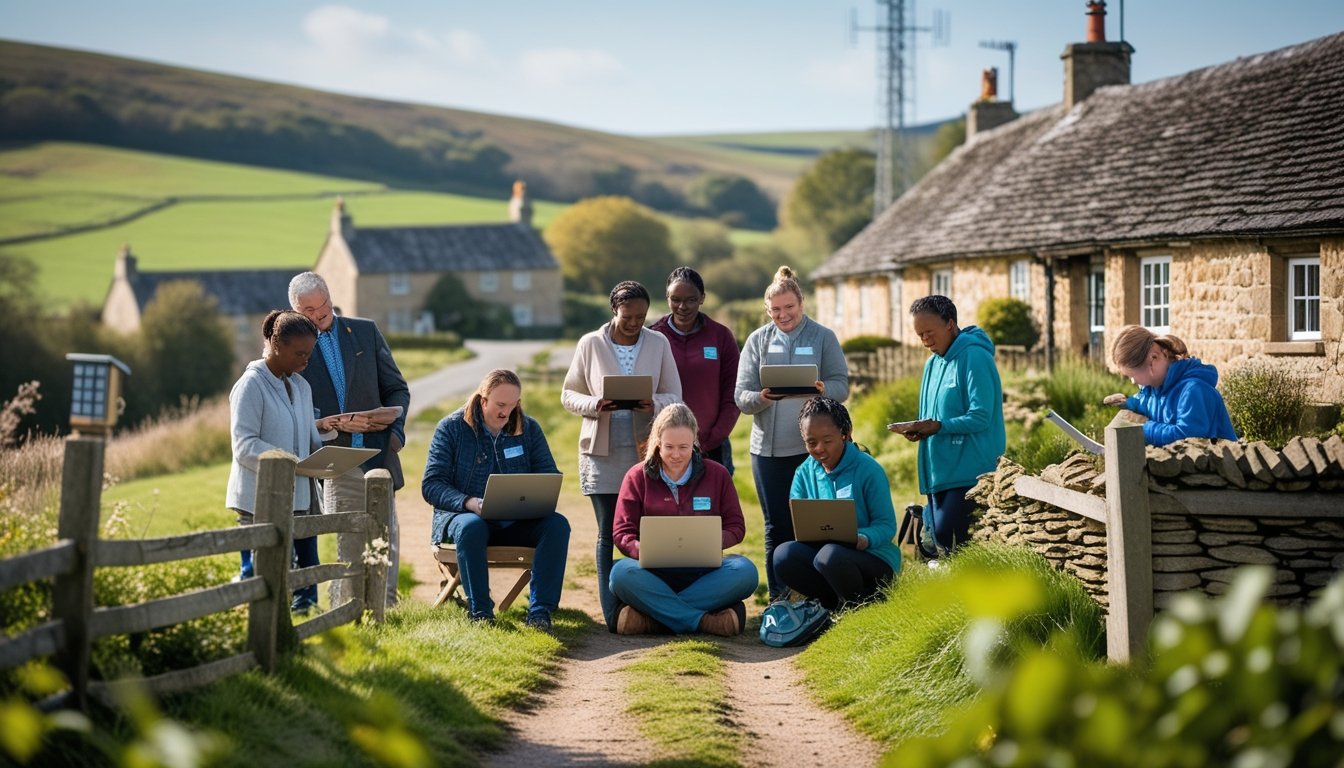
Digital inclusion is crucial for rural areas where connectivity and access can be limited. Our focus is on how various initiatives from the government, local authorities, and strategic partnerships are driving significant change in the digital landscape of the UK's countryside communities.
Government Action Plans and Policies
The UK government's efforts include comprehensive action plans targeting digital inclusion in countryside areas. A notable initiative is the Digital Inclusion Action Plan, aiming to enhance digital skills and broaden access. This plan establishes a Digital Inclusion Innovation Fund designed to support local projects that strive to increase digital participation. By focusing policy frameworks on rural challenges, the government works to ensure that communities in remote areas receive necessary digital support, allowing residents to access vital online services.
Government policy is further strengthening digital infrastructure through targeted investment in broadband expansion and mobile network improvements. This infrastructure development is essential for communities where connectivity issues have historically been a barrier. We remain committed to supporting these governmental efforts, recognising the policy as a foundation for significant progress in rural digital inclusion.
Local Authority and Charity-Led Programmes
Local authorities and charitable organisations play critical roles in executing on-the-ground digital inclusion initiatives. Through programmes such as Digital Communities Wales and 100% Digital Leeds, local entities facilitate access to digital technologies and training. These projects deliver tailored resources to meet the distinct needs of their communities, empowering residents with essential digital skills.
Key initiatives often involve providing equipment such as tablets and internet hotspots, ensuring the most vulnerable populations can stay connected. Charities enhance their efforts by offering courses and workshops designed to build confidence among participants, effectively combating digital exclusion. By fostering a bottom-up approach, these programmes address grassroots needs and create a more inclusive digital environment in rural areas.
Strategic Partnerships and Community Engagement
Strategic partnerships have proven vital in extending the reach and efficiency of digital initiatives. Collaborations between private enterprises, non-profits, and local governments enable innovation and resource sharing. Using advances such as AI, these partnerships support community-driven development, aiming to sustain long-term digital integration in rural regions.
A strong emphasis is placed on community engagement, encouraging local input to tailor projects to specific needs. By involving community members at every stage, from planning to execution, digital initiatives earn greater trust and relevance. Engaged communities contribute ideas and feedback, ensuring solutions are both practical and culturally resonant, ultimately leading to more successful outcomes in digital inclusion efforts.
Addressing Barriers and Advancing Digital Equity in Rural Areas
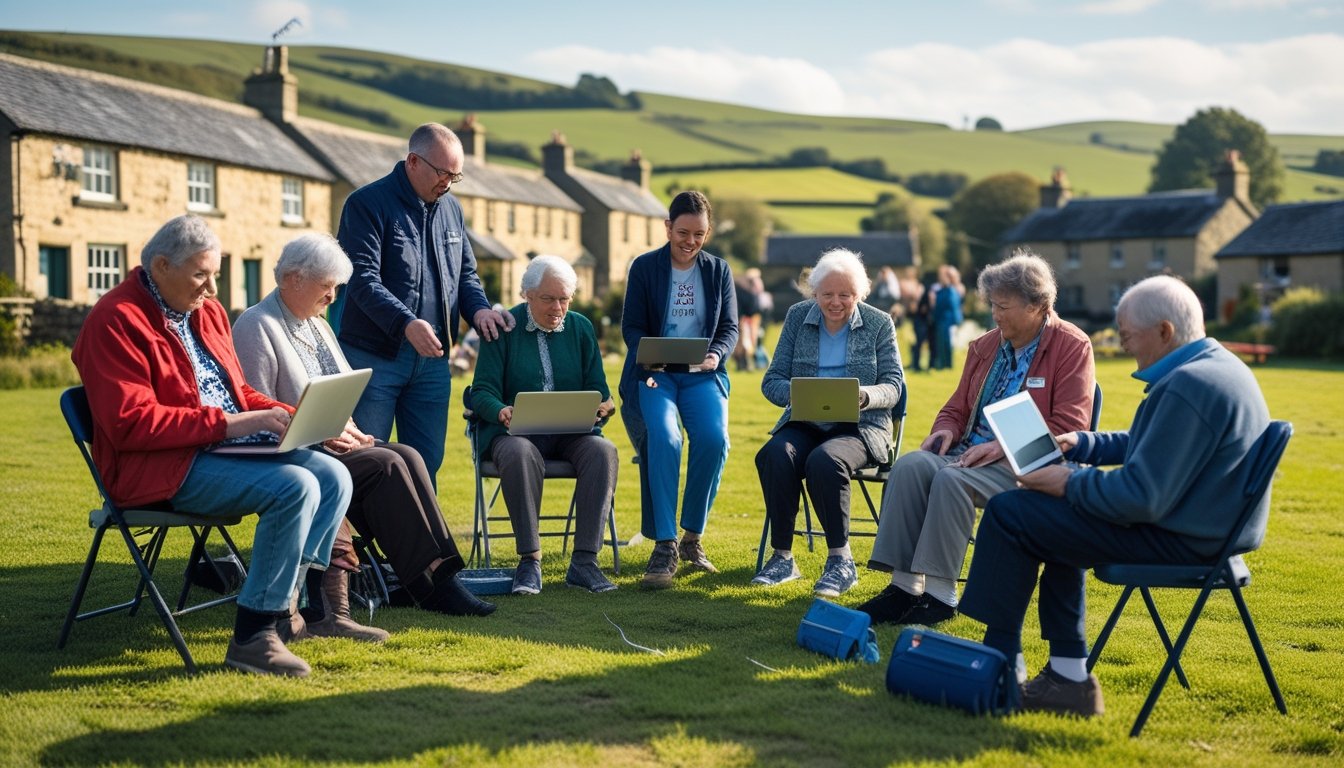
In rural areas, digital inclusion initiatives must tackle a range of barriers, from infrastructure limitations to digital literacy. By understanding these challenges, we can work towards creating a more equitable digital landscape for all.
Connectivity Challenges and Infrastructure Solutions
Rural areas in the UK often face significant connectivity challenges, primarily due to geographic isolation and limited infrastructure investment. The digital divide persists, largely driven by slower internet speeds and unreliable coverage. To tackle these issues, we need innovative infrastructure solutions like expanding fibre optic networks and deploying satellite broadband options. Government initiatives and public-private partnerships can play pivotal roles in funding and accelerating these projects. Additionally, mobile network operators can enhance coverage by installing more mobile towers in underserved areas. By addressing these connectivity challenges, we can ensure that rural communities have the necessary infrastructure to support digital inclusion.
Tackling Digital and Device Poverty
Digital and device poverty remain critical barriers to digital equity in rural communities. Many households, especially low-income ones, lack access to essential digital devices, which perpetuates exclusion. Programmes to provide affordable or subsidised devices to affected individuals can help alleviate this issue. Charitable organisations and government schemes can distribute refurbished devices and offer internet subsidy plans for disadvantaged families. Local community centres can set up loan programmes to allow shared access to technology. By increasing the accessibility of devices, we can help residents fully participate in the digital economy and improve their quality of life.
Building Digital Skills for All Generations
In addition to physical access, digital skills are crucial for bridging the digital divide. We must focus on providing training across all age groups, recognising that young people and older adults face different gaps. For younger generations, integrating digital literacy into school curricula helps ensure foundational knowledge. For older adults, community workshops and online courses tailored to their pace can improve digital literacy. Collaboration with local libraries, schools, and community centres will further promote digital skills development. By equipping individuals with the necessary skills, we empower them to navigate digital technologies confidently and contribute to their community's prosperity.
Frequently Asked Questions

Digital inclusion initiatives in the UK countryside aim to bridge the gap caused by lack of connectivity, ensuring equal access to technology and digital skills development. These efforts impact education, small businesses, and community sustainability.
What are the core objectives of digital inclusion programmes in rural UK areas?
The main goals are to improve access to the internet, enhance digital skills, and eliminate barriers to technology use. By doing so, rural communities can benefit from opportunities that were previously out of reach, leading to stronger local economies and greater civic participation.
How are local governments approaching connectivity challenges in remote UK communities?
Local authorities often implement strategies that include expanding broadband infrastructure and collaborating with tech companies to improve connectivity. They also support community initiatives that address specific needs through tailored digital solutions, which make a significant difference in these areas.
What funding opportunities are available for implementing digital skills training in the countryside?
Various funding sources are accessible, including government grants such as the Digital Inclusion Innovation Fund. Additionally, partnerships with private sector companies and non-profit organisations provide financial support to local projects aiming to boost digital skills.
Can you describe successful case studies of digital inclusion in small UK villages or towns?
One example comes from Digital Communities Wales, where focused efforts have improved internet access and digital literacy amongst residents. This has empowered local populations to engage with digital tools effectively, showcasing the positive impact of such initiatives.
What strategies are in place to ensure the sustainability of digital initiatives in rural settings?
Sustainability is ensured through community-led models that foster ownership and continued engagement with technology. Training local residents in digital skills and forming technology-focused groups help maintain momentum and adapt to evolving needs.
How does the digital divide in the UK countryside impact education and small businesses?
Education suffers when students in rural areas lack reliable internet access, hindering their ability to complete assignments and engage in online learning. Small businesses also face challenges in reaching broader markets and operating efficiently without adequate digital tools, reinforcing the need for comprehensive digital inclusion initiatives.