
Late updated: 10 Dec 2025 13:12
Written by: Oliver Bennett
Eco-Friendly Transport Solutions For UK Villages: Innovative Approaches for Sustainability
The movement towards eco-friendly transport solutions is gaining traction as UK villages aim to reduce their environmental footprint and improve quality of life. There's a growing understanding that rural areas play a vital role in tackling carbon emissions. By prioritising green transport options such as cycling, walking, and public transportation powered by renewable energy, village communities can enhance both sustainability and connectivity.

Adapting to eco-friendly transport solutions isn't just about reducing emissions; it's about creating vibrant, resilient communities. From enhancing public health to boosting local economies, these innovations provide a multitude of benefits. Engaging with local stakeholders ensures that initiatives meet the needs of residents while fostering community pride and investment in sustainable practices.
Transforming transport in suburban and rural settings requires a collaborative approach. We need to consider a hierarchy of transportation options and the specific needs of each community. This transformation represents a crucial shift towards a more sustainable and connected future for our rural environments.
Key Takeaways
- Eco-friendly transport can significantly reduce rural emissions.
- Community engagement is essential for sustainable transport solutions.
- Transforming village transport boosts health and local economies.
Core Eco-Friendly Transport Solutions for UK Villages

In UK villages, adopting eco-friendly transport solutions can significantly reduce carbon emissions and improve public health. From electric vehicles to active travel initiatives, these strategies offer practical ways to transform our transport systems.
Electric and Hybrid Vehicle Adoption
Increasing the adoption of electric vehicles (EVs) and hybrid vehicles is crucial for reducing emissions in UK villages. Zero-emission vehicles produce no tailpipe emissions, which helps lower air pollution and combat climate change. Several models, such as the Tesla Model 3 and offerings from Mercedes-Benz, are gaining popularity. To encourage this shift, the government can introduce incentives like grants for purchasing EVs and investments in charging infrastructure.
Charging points in community centres and village squares make it convenient for residents to keep their vehicles powered. Additionally, low-emission zones can be established to limit entry for non-compliant vehicles. This transition not only supports sustainable transport but also enhances quality of life by reducing noise and improving air quality.
Public Transport Innovations and Accessibility
Improving public transport systems is essential for sustainable urban mobility in village settings. Enhanced bus services with low-emission or hybrid buses can provide cleaner travel options. Expanding routes to connect remote areas ensures accessibility and inclusivity. Introducing smart ticketing systems can streamline travel, making public transport a more attractive option.
Investment in transportation networks that integrate buses, rail, and possible park-and-ride facilities can reduce the reliance on personal vehicles. Enhanced schedules and reliable services encourage usage, ultimately reducing the carbon footprint of the community. These innovations support eco-friendly transport solutions by offering efficient alternatives to car travel, benefiting both the environment and residents.
Active Travel: Cycling and Walking Initiatives
Promoting active travel through cycling and walking initiatives is a practical way to foster a healthier community and environment. By developing safe and extensive cycling infrastructure, such as dedicated bike lanes and secure parking, villages can encourage residents to opt for two-wheeled transport. Offering bike-sharing schemes provides convenient access to bikes for short trips.
Walking paths linked to local amenities and transport hubs make it easier for residents to choose walking for short distances. Programmes that promote active travel not only lower greenhouse gas emissions but also contribute to improving public health by integrating exercise into daily routines. These small changes can have a significant impact on reducing the carbon footprint of villages.
Car-Sharing and Ride-Sharing Schemes
Implementing car-sharing and ride-sharing schemes can reduce the number of vehicles on the road, leading to less congestion and pollution. By establishing local schemes, villagers can share rides to common destinations like shops or workplaces, making travel more efficient and economical.
These schemes often employ low-emission vehicles, further decreasing the environmental impact. Ride-sharing apps facilitate coordination and offer the flexibility of arranging convenient travel times. Car-sharing clubs provide access to cars without ownership burdens, reducing the need for multiple private vehicles. These shared transport solutions are key components of an eco-friendly transport network, supporting a shift towards more sustainable living in our villages.
Enabling Sustainable Local Mobility and Community Engagement

Creating sustainable local mobility options requires a strategic approach that integrates technological advancements, urban design, and community involvement. As we focus on reducing emissions and supporting net-zero ambitions, engaging local authorities and residents is pivotal in shaping effective transport solutions.
Integration of Renewable Energy and Battery Technologies
Harnessing renewable energy sources is key to sustainable mobility. By leveraging solar and wind power, we can power public transportation systems, reducing dependence on fossil fuels. Battery technology plays a vital role in enhancing the adoption of electric and autonomous vehicles. Improved energy storage solutions increase the viability of electric transport, supporting rural areas in achieving energy security and economic independence. This shift not only reduces emissions but also contributes to meeting national climate targets. Battery advances also enhance the reliability of backup power systems, facilitating energy resilience for local communities.
Urban Design and Green Space Integration
Urban planning tailored to sustainable transport is essential. Incorporating green spaces into village designs enhances environmental benefits while promoting social well-being. Pedestrian paths, cycle lanes, and public parks can help reduce traffic congestion. This approach can include tax incentives for developers who prioritise eco-friendly designs, encouraging investment in net-zero infrastructure. Transport for London initiatives exemplify effective integration of urban design, serving as valuable models. Dedicated areas for electric vehicles and public transport further encourage greener choices, contributing to reduced emissions.
Smart Data and Traffic Pattern Management
Utilising smart data offers a sophisticated method to manage local traffic patterns. By analysing real-time data, we can make informed decisions on traffic flow, minimising congestion and enhancing public transport usage. These systems can adapt to the needs of the community, promoting more efficient and convenient transit solutions. Additionally, traffic pattern insights support the planning of autonomous vehicles, enabling more adaptive and responsive public transport networks. The economic benefits of such systems are significant, leading to smoother daily commutes and less environmental impact, aligning with broader sustainability goals.
Engaging Communities and Local Authorities in Transport Planning
Active community engagement is fundamental in developing transport strategies that reflect local needs and values. By involving residents and local authorities in decision-making processes, we foster a sense of ownership and collaboration. Public forums and outreach initiatives allow us to gather diverse perspectives, ensuring sustainability and equity in transport projects. Building these relationships enhances trust and cooperation, ultimately leading to more successful implementation of sustainable transport solutions. Collaborative efforts help address barriers, enabling communities to fully support and benefit from eco-friendly transportation developments.
Frequently Asked Questions
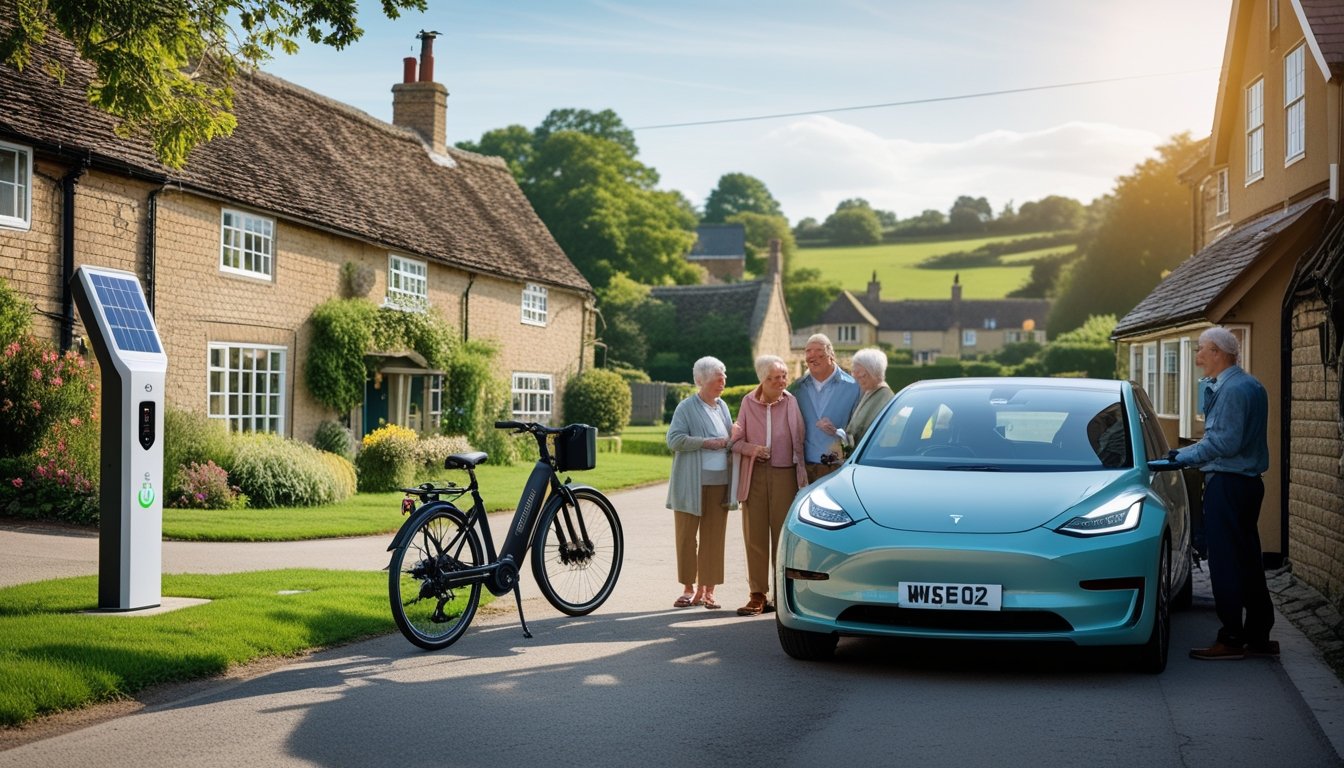
Our exploration into eco-friendly transport solutions in UK villages reveals varied sustainable methods and community engagement strategies. These solutions focus on energy-efficient technologies and grassroots mobilisation, emphasising government support and the role of community-centric car-sharing.
What are the most effective sustainable transportation methods for rural UK areas?
In rural UK regions, enhancing public transport networks with rural-specific solutions like minibuses and community transport is critical. Implementing renewable energy options, such as solar-powered vehicles and electric bikes, plays a significant role. These methods reduce carbon emissions and help maintain village connectivity.
How can village communities in the UK be incentivised to adopt greener transport options?
Incentivising communities involves a combination of education campaigns, subsidies for renewable energy solutions, and providing grants for green transport initiatives. Additionally, when local councils partner with community groups, they can demonstrate the economic and environmental benefits of sustainable transport, making it a tangible choice for villagers.
What government initiatives are available to support eco-friendly transport in UK villages?
There are several government initiatives aimed at promoting eco-friendly transport, such as the Rural Mobility Fund. Funding schemes like these focus on innovative and sustainable transport solutions tailored to rural areas. Local authorities also receive support for creating infrastructure that enables cleaner transportation options.
In what ways can car-sharing schemes benefit UK rural communities in reducing their carbon footprint?
Car-sharing schemes offer a practical solution by reducing the number of vehicles on the road, thereby lowering emissions. These schemes enable villagers to share resources, cut down transport costs, and encourage communal use of energy-efficient vehicles, enhancing sustainability and fostering community collaboration.
Can electric vehicles be a practical solution for transportation in UK villages with limited charging infrastructure?
Electric vehicles (EVs) can indeed be practical, provided there's investment in local charging infrastructure. Portable and community-owned charging stations are viable solutions for off-grid areas. EV manufacturers and energy companies are increasingly collaborating with rural councils to expand these charging options.
How does the promotion of cycling and walking contribute to environmental sustainability in UK village settings?
Promoting cycling and walking helps reduce reliance on cars, leading to decreased emissions and healthier populations. By developing safe cycle lanes and walking paths, villages not only enhance local transport networks but also support residents in adopting more sustainable and active lifestyles.