
Late updated: 09 Dec 2025 09:12
Written by: Oliver Bennett
Innovative Renewable Energy for UK Village Schools: Transforming Education Spaces
The pursuit of zero-carbon energy solutions is becoming increasingly vital for communities worldwide, and village schools in the UK are stepping up to the challenge. Local educational institutions are integrating innovative renewable energy technologies like solar panels and geothermal systems to not only cut energy costs but also contribute positively to the environment. This transformation not only promises educational facilities a future of energy independence and sustainability but also inspires the next generation of environmentally-conscious citizens.
These renewable energy initiatives are funded by government support and ingenious partnerships, ensuring that even smaller schools have access to cutting-edge energy solutions. By significantly reducing their carbon footprints, these village schools are set to become role models for sustainable living. Moreover, the financial savings achieved through these initiatives can be redirected to enhance learning environments, thus enriching the educational experience for students.
Key Takeaways
- UK village schools are adopting renewable energy to cut costs and emissions.
- Government support is crucial for implementing innovative energy solutions.
- Energy savings can enhance educational resources and environments.
Innovative Renewable Energy Solutions for Village Schools
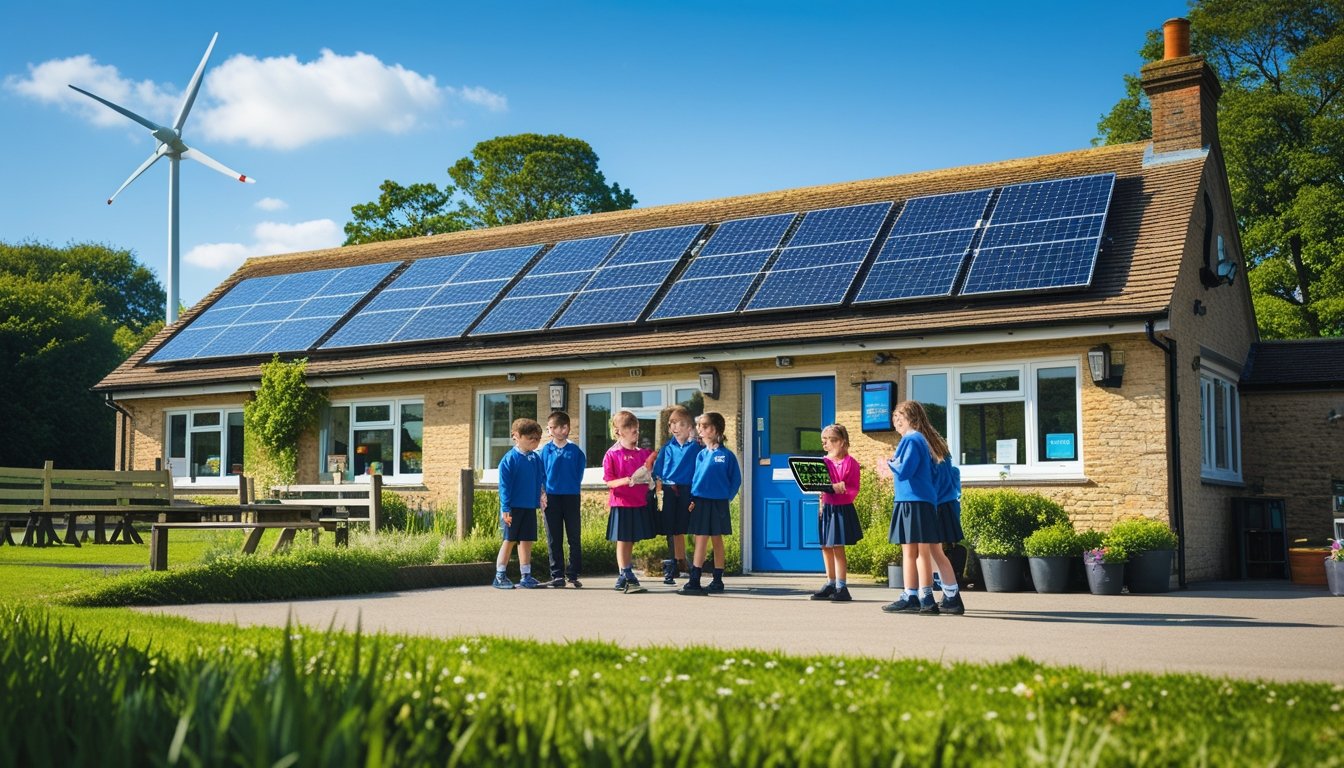
We are exploring the adoption of renewable energy in UK village schools, focusing on tailored solar panel systems, heat pumps, and the integration of solar PVT technologies. These cutting-edge solutions address the unique challenges faced by smaller educational institutions.
Current Landscape of Renewable Energy Adoption
In village schools across the UK, renewable energy adoption is gradually becoming more common. The need for sustainable power sources is driven by both environmental impact and the desire to reduce energy costs. Rural areas often face logistical challenges, such as connectivity and funding, but many schools are rising to meet these hurdles. Progressive policies and community support play critical roles, enabling schools to transition from traditional energy sources to greener alternatives. The result is a growing number of schools incorporating solar panels and other technologies to create more efficient and eco-friendly campuses.
Tailored Solar Panel Systems for Village Schools
Solar panel systems designed for village schools must be tailored to accommodate unique site-specific conditions. These include roof orientation, available space, and local weather patterns, which can significantly affect energy generation. Customised systems can maximise efficiency and energy production by using flexible panel configurations and adaptive mounting solutions. Furthermore, financial considerations are paramount. Many schools utilise grants or community crowdfunding to defray initial costs. Such initiatives not only provide access to solar technology but also enhance community involvement, fostering a shared commitment to sustainability.
Emerging Technologies: Heat Pumps and Solar PVT Integration
Heat pumps and solar PVT (photovoltaic-thermal) panels represent emerging technologies with transformative potential for village schools. Heat pumps offer an energy-efficient solution for heating needs, using ambient air or ground temperature as a heat source. Coupling these with solar PVT systems, which capture both electrical and thermal energy, creates a comprehensive renewable energy solution. This dual function can significantly reduce reliance on fossil fuels for both electricity and heating. Despite higher upfront costs, these innovative solutions promise long-term savings and contribute to a school environment that supports educational and environmental objectives. Embracing these technologies requires strategic planning and investment, illustrating a forward-thinking approach to energy management.
Benefits, Funding, and Implementation for UK Village Schools
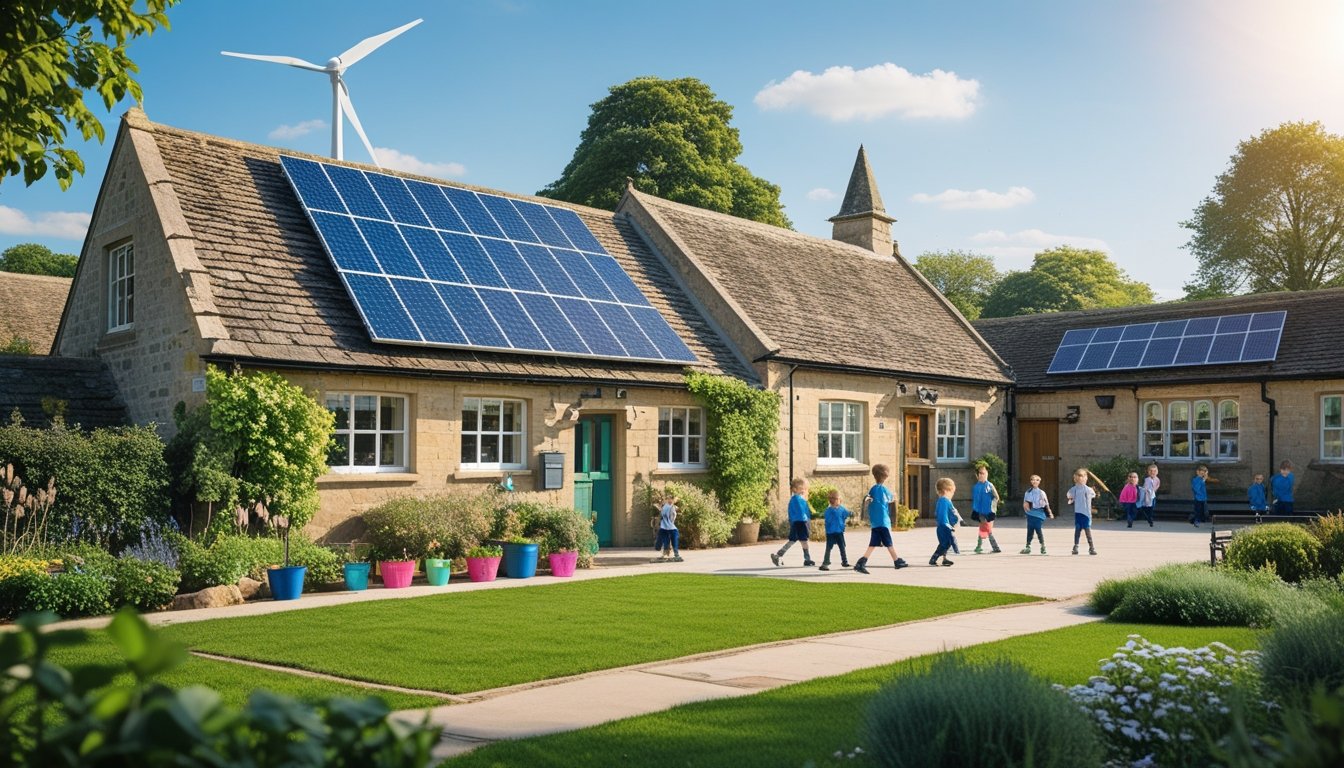
Transitioning to renewable energy can provide significant financial savings and environmental benefits, using innovative funding options to offset initial costs. By effectively implementing these systems, schools can enjoy an eco-friendly energy source that supports sustainable development.
Financial and Environmental Advantages for Schools
Switching to renewable energy sources, such as solar and wind, offers village schools in the UK substantial savings on energy bills. This financial relief allows schools to allocate funds to educational programs rather than operational expenses. Additionally, renewable energy sources help to reduce carbon footprints, contributing to the fight against climate change. Working with initiatives like the Schools’ Energy Co-operative further enhances these benefits. This programme installs solar panels at no upfront cost, letting schools save thousands on electricity over time.
Government and Community Funding Opportunities
Village schools have access to a variety of funding options that enable them to invest in renewable energy projects. Government grants often target energy efficiency improvements, offering financial support for installations such as solar panels and more efficient heating systems. Community grants also play a pivotal role, with programmes like the Renewable Rewards Fund providing important funding. These resources often cover a significant portion of costs, enabling schools to implement these projects without major financial strain. Being aware of these funds and applying in a timely manner is crucial for schools hoping to modernise sustainably.
Steps to Successful Renewable Energy Installation
Planning and executing a renewable energy project involves several key steps. First, conducting a thorough energy audit helps identify the most effective upgrades. Partnering with experienced companies ensures high-quality installations and long-term maintenance support. Schools should engage with experts early on to tailor suitable solutions to their specific needs. Meticulous planning, from initial consultation to final installation, guarantees schools can optimise energy efficiency and cost savings. Adhering to any relevant regulations and seeking community involvement can further support long-lasting success. Through proper planning and execution, schools stand to benefit immensely from integrating renewable energy systems.
Frequently Asked Questions
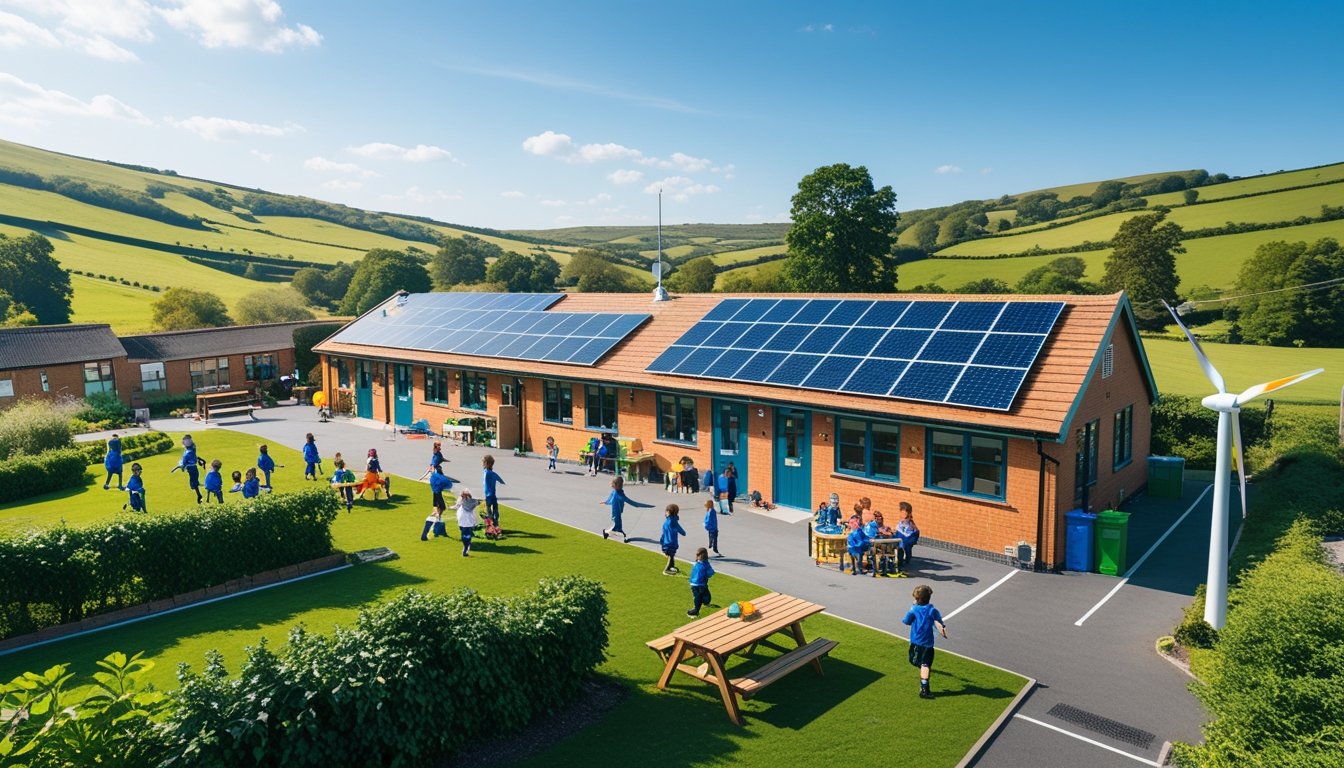
The integration of renewable energy in UK village schools presents a chance to cut costs and promote environmental responsibility. Here, we address common questions on how rural educational establishments can adopt sustainable energy solutions.
How can village schools in the UK integrate renewable energy sources into their existing infrastructure?
Village schools can begin by assessing their current energy use and identifying areas where renewable energy can be implemented. Solutions such as solar panels can be installed on rooftops, while wind turbines can be considered if space allows. Ground-source heat pumps and energy-efficient lighting are other methods to enhance sustainability.
What are the most cost-effective renewable energy solutions for small educational establishments in rural areas?
In rural settings, solar panels tend to be the most viable option due to their decreasing costs and high efficiency. Other cost-effective alternatives include biomass boilers and small wind turbines, which, depending on location, can be effective. Additionally, schools can utilise energy storage systems to optimise these resources.
What government grants are available to UK village schools for installing renewable energy systems?
UK village schools can benefit from various government schemes such as the Renewable Heat Incentive and the Smart Export Guarantee. These programmes are designed to support the installation of renewable technologies by providing financial incentives that help offset initial costs.
What are the long-term benefits of adopting renewable energy in the educational sector?
Renewable energy can significantly reduce operating costs by lowering utility bills. Beyond financial savings, schools contribute to reducing carbon footprints, fostering a healthier environment. This transition also aligns with national goals for sustainable development and sets a strong example for students and communities.
How does the use of renewable energy in schools contribute to environmental education and awareness?
By integrating renewable systems, schools serve as practical examples of sustainability in action. They provide students with firsthand learning opportunities about renewable technologies and environmental stewardship. This practical exposure helps inculcate a culture of conservation and ecological responsibility among the young.
What are the challenges faced by rural schools in the UK when transitioning to renewable energy sources?
Rural schools may encounter challenges such as funding limitations and logistical issues related to the installation and maintenance of renewable systems. Access to technology and expertise can also pose obstacles. However, community support and collaboration with energy experts can mitigate these issues, enabling a smooth transition.